
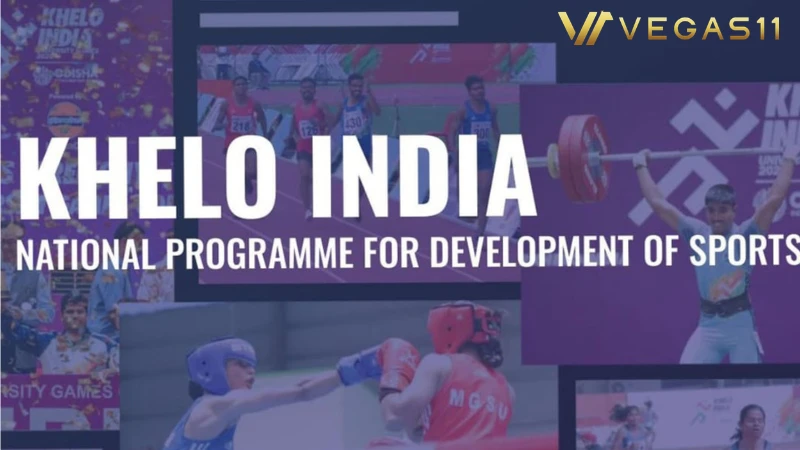
India’s sporting ambitions just received their biggest financial push in the country’s history. The Centre has cleared a provision of Rs 36,441 crore for the New Khelo India Scheme covering 2026 to 2031, a figure that officials describe as nearly eight times larger than the outlay for the previous version of the scheme and the single largest investment in Indian sport since independence.
The announcement came at a press conference in Bhopal, jointly organised by the Sports Authority of India’s Central Regional Centre and Madhya Pradesh’s Department of Sports and Youth Welfare. Abhisek Singh Chauhan, Regional Director of SAI CRC Bhopal, laid out the scale of the new plan, noting that the scheme is expected to reach ten times more athletes than before, a jump that signals a genuine shift in how India intends to build its sporting pipeline from the ground up.
What the New Khelo India Scheme Means for Indian Athletes
Officials were careful to frame this as more than a routine funding increase. Chauhan described the scheme as a national mission built around giving young people opportunity, confidence, and a genuine platform to chase sporting excellence, rather than just another government programme ticking a box. The stated goal is to build a seamless pathway that starts at grassroots talent identification and ends with athletes competing at the international level, all tied to the broader Viksit Bharat@2047 vision of turning India into one of the world’s leading sporting nations.
Athlete support under the new framework goes well beyond coaching and equipment. The scheme is designed to cover diet and accommodation, sports kits, travel for competitions, medical care, and education, backed by a growing network of sports science professionals meant to make training more evidence-based than it has traditionally been in Indian sport.
Madhya Pradesh to Expand Khelo India Centres and Position Bhopal as Sports Hub
Vishvas Kailash Sarang, Madhya Pradesh’s Minister for Sports and Youth Welfare, attended the event as chief guest and used the platform to outline the state’s own ambitions under the scheme. He confirmed that Madhya Pradesh currently runs 52 Khelo India Centres, all of which will be strengthened further, alongside a fresh push to develop Bhopal into one of the state’s major sports hubs.
Sarang added that authorities plan to map sporting talent across different regions of Madhya Pradesh and build region-specific development strategies rather than applying a one-size-fits-all approach. Infrastructure spending will follow what officials called a medal-oriented strategy, with projects funded through a 60:40 cost-sharing arrangement between the Centre and the state wherever applicable.
Sports Infrastructure and Technology at the Core of Khelo India 2026-31
The scheme organises infrastructure spending around three broad pillars. One strand targets facilities aimed squarely at improving India’s medal count at the Olympics and other major international events. Another focuses on modernising existing strategic sports complexes, and the third hands states a bigger say in planning infrastructure through individual state action plans.
Technology has been written into the plan as a core pillar rather than an add-on. The scheme envisions AI and video-based scouting to identify talent, wearable devices to track athlete performance, and digital systems to manage competitions, all aimed at making an athlete’s journey from grassroots discovery to elite competition far more data-driven than it has been.
A Structured Pathway From Grassroots Talent to Elite Competition
A key feature of the new scheme is the Khelo India Athlete and Emerging Khelo India Athlete categories, designed to close the gap between early talent identification and top-level competition. The idea is to catch promising athletes who show potential but have not yet reached elite status, and give them a clearer route upward through the system rather than letting them fall through the cracks.
Regular competitive opportunities sit at the heart of that pathway, spanning school, university, regional, and zonal levels. Beyond the well-known Khelo India Youth Games and Khelo India University Games, the wider competitive calendar includes the Khelo India Para Games, Winter Games, Beach Games, Tribal Games, Water Sports, and the ASMITA Women’s Leagues, giving athletes across disciplines and backgrounds a chance to test themselves against stronger competition on a regular basis.
Coaching Standards and Fitness Culture Also Get a Boost
The scheme extends its focus to the people behind the athletes as well. Coaches and support staff are set to gain access to skill development and capacity-building programmes, along with international exposure, while a proposed National Coach Accreditation Board aims to raise professional standards across the coaching ecosystem. Athletes themselves will get access to a wider support team of doctors, physiotherapists, psychologists, nutritionists, and biomechanists.
On the grassroots side, the Fit India Movement is set to expand through community fitness hubs, mass participation drives, yoga initiatives, and support for indigenous games, with a particular push to bring more women and persons with disabilities into the fold. For a state like Madhya Pradesh, officials believe the combination of an expanding Khelo India Centre network, scientific talent identification, and targeted infrastructure spending could help build a genuinely sustainable sporting pipeline over the next five years. Vegas11 News will continue tracking how the rollout of the New Khelo India Scheme unfolds across states as India builds toward its bigger sporting goals.